Overview
Scheduler
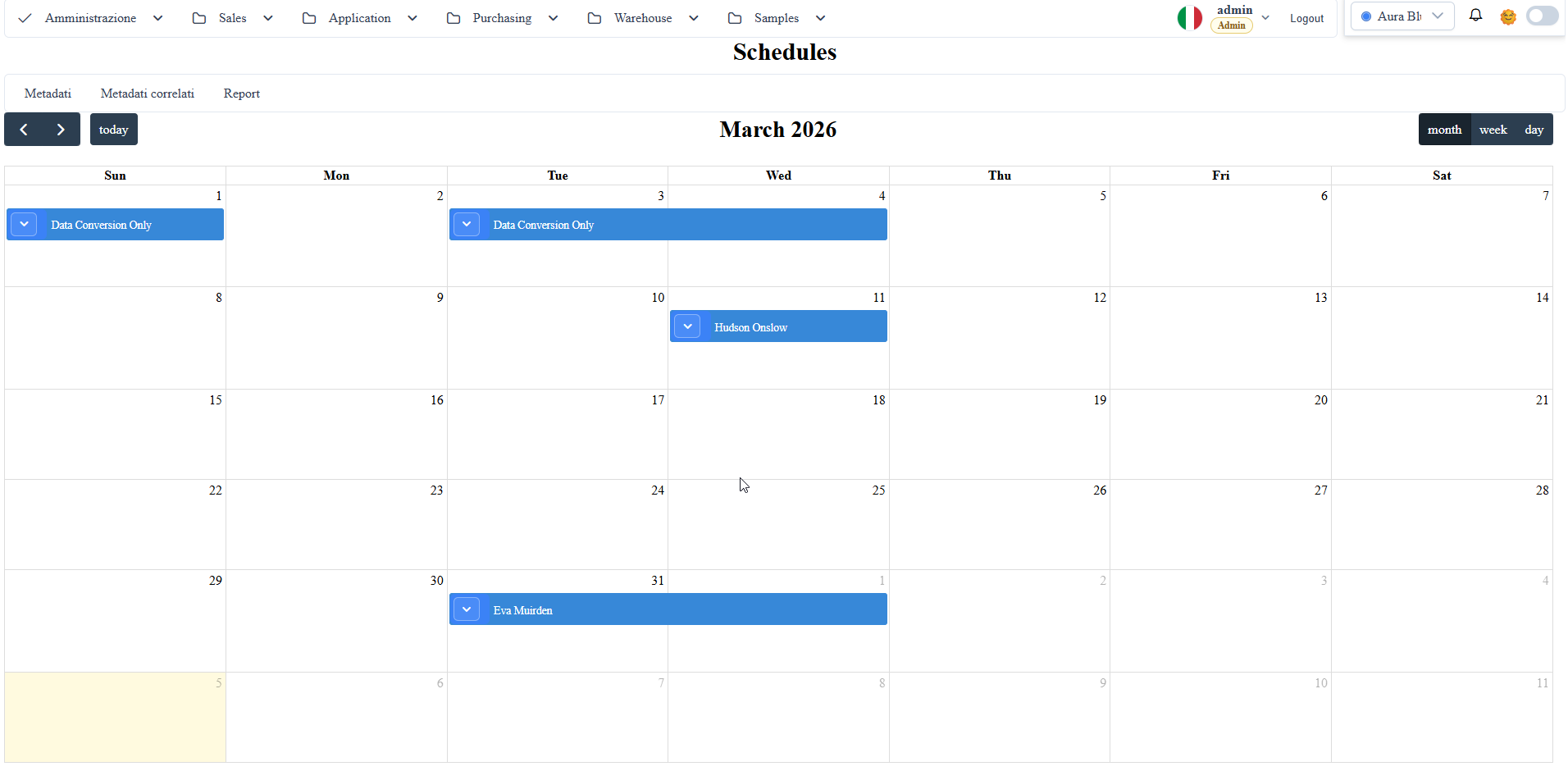
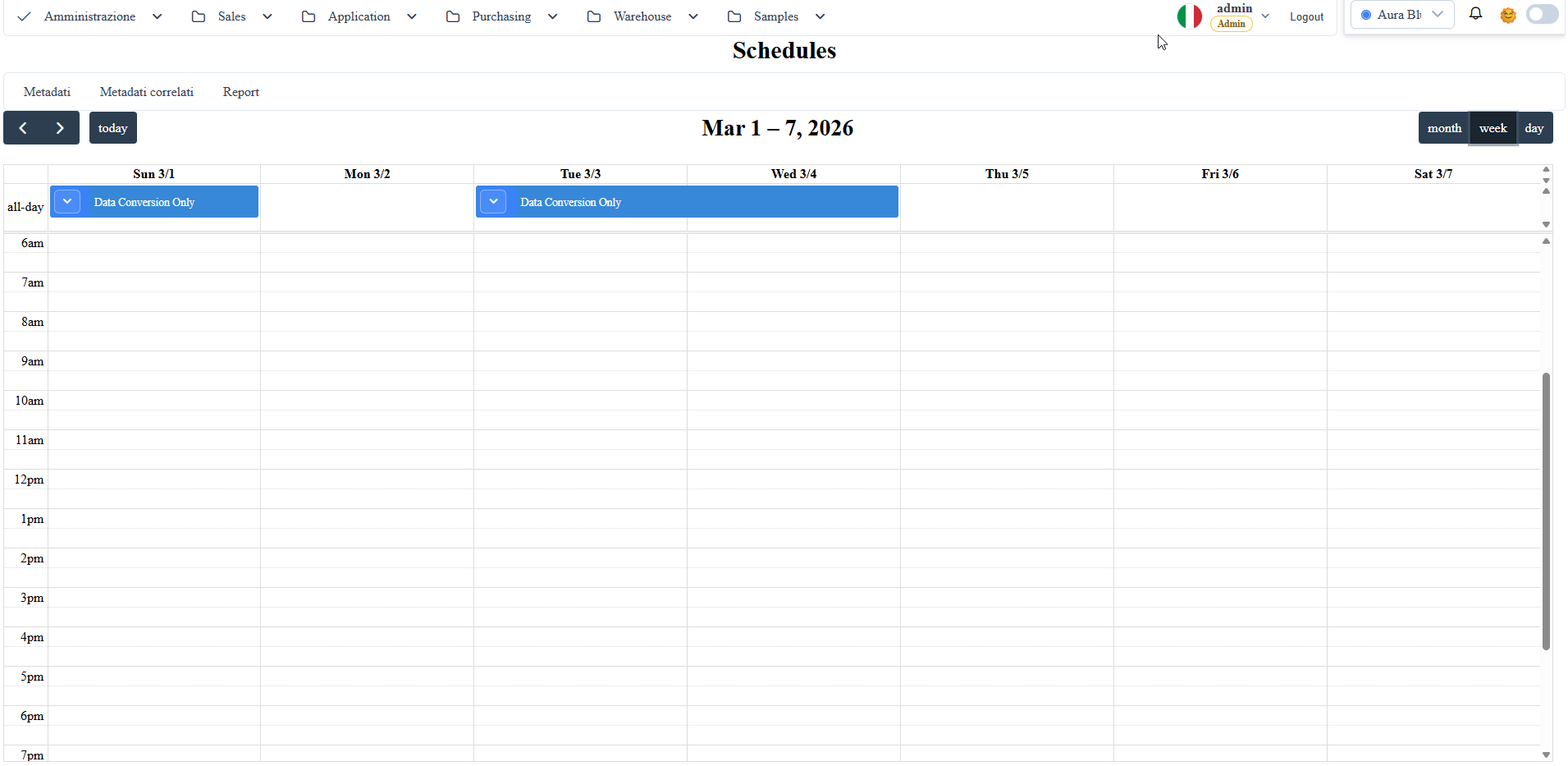
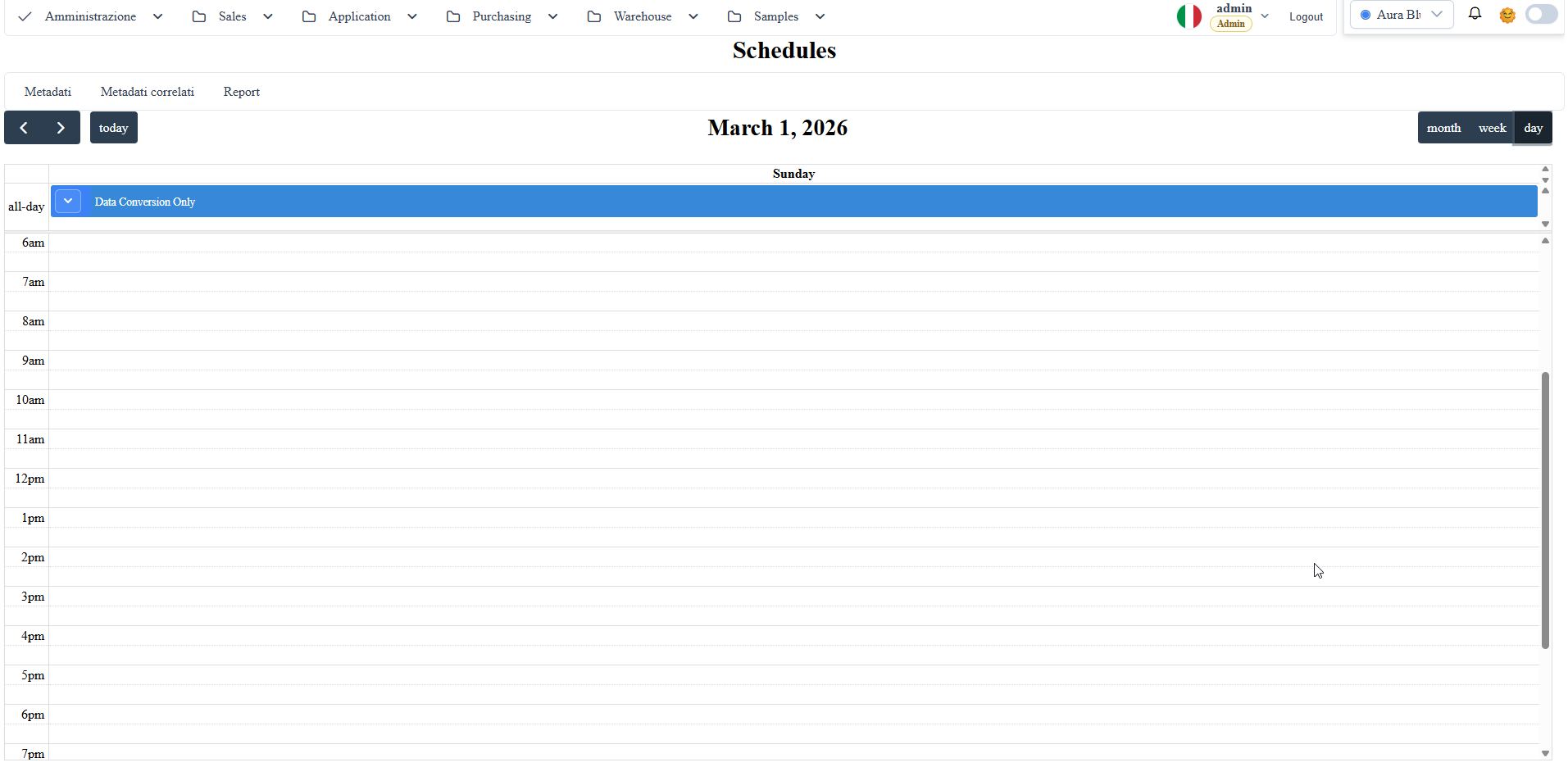
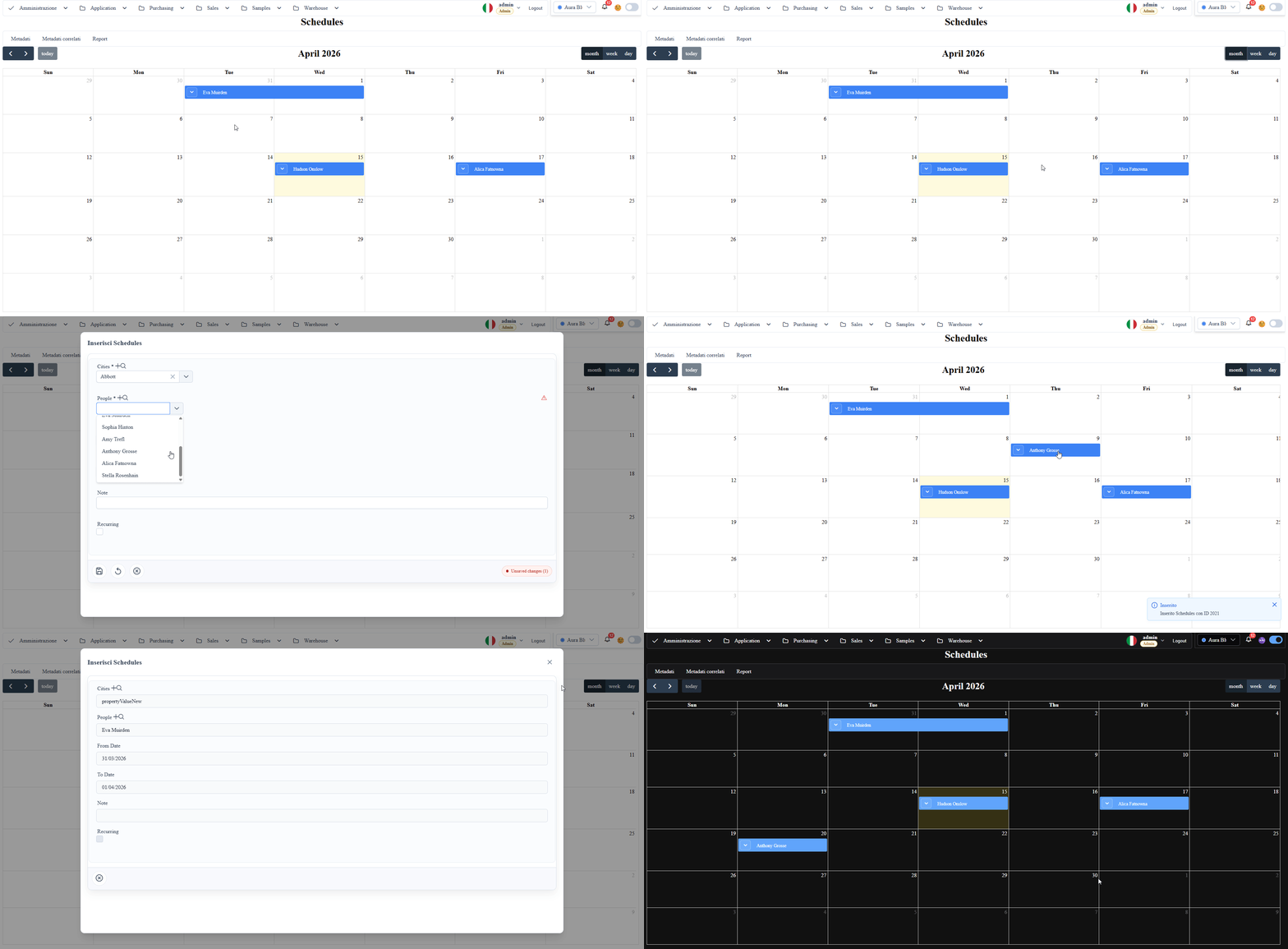
Calendar view for activity planning and timeline with metadata-driven binding.
Use Cases
- Shift scheduling.
- Intervention agenda.
- Business event timeline.
Dependencies
- Correct date/time fields in metadata.
- Scheduler archetype configurations.
md_props_bag: archetypes.scheduler
{
  "archetypes": {
    "scheduler": {
      "advancedFilter": false,
      "fromField": "start_at",
      "toField": "end_at",
      "titleField": "title",
advancedFilter: whentrue, shows thewuic-filter-barfor theschedulerarchetype (at data-repeater level).fromField: event start date/time field.toField: event end date/time field.titleField: event title text field.itemTemplateString: custom event block template.titleFunction: JS callback to compose a dynamic title.
Template Context (itemTemplateString)
The following inputs are available in the custom template:
record: alias of the current event record.rowData: alias of the current event record.metaInfo: datasource table/column metadata.datasource: reference to the associated datasource component.
Runtime context used by the framework:
inputs: { record: item, rowData: item, metaInfo: metaInfo, datasource: datasource }Events and Subscriptions (Host)
Events available on wuic-scheduler-list:
onSchedulerDateClick:full-calendar dateClickrelay.onSchedulerEventClick:full-calendar eventClickrelay.onSchedulerEventDrop:full-calendar eventDroprelay.onSchedulerEventResize:full-calendar eventResizerelay.onSchedulerDatesSet:full-calendar datesSetrelay.onSchedulerDataBound: emitted when the wrapper completes event binding from the datasource.onSchedulerEventSync: emitted after successful sync on event drag/drop/resize.
Template example:
<wuic-scheduler-list
  [hardcodedDatasource]="citiesDs"
  (onSchedulerDateClick)="handleDateClick($event)"
  (onSchedulerEventClick)="handleEventClick($event)"
  (onSchedulerEventDrop)="handleEventDrop($event)"
  (onSchedulerEventResize)="handleEventResize($event)"
  (onSchedulerDatesSet)="handleDatesSet($event)"
Subscribe example (ViewChild):
@ViewChild(SchedulerListComponent) scheduler?: SchedulerListComponent;
private readonly subs = new Subscription();

ngAfterViewInit(): void {
  if (!this.scheduler) return;
  this.subs.add(this.scheduler.onSchedulerDateClick.subscribe((e) => console.log(e)));
  this.subs.add(this.scheduler.onSchedulerEventClick.subscribe((e) => console.log(e)));
<!-- import-and-mount -->
Import and mount (Angular component)
Import LazySchedulerListComponent from 'wuic-framework-lib' and mount it with the framework DataSource:
import { DataSourceComponent, LazySchedulerListComponent } from 'wuic-framework-lib';

@Component({
  selector: 'app-esempio',
  imports: [DataSourceComponent, LazySchedulerListComponent],
  template: `
    <wuic-data-source #ds [hardcodedRoute]="'<route>'" [autoload]="true"></wuic-data-source>
EXACT names (wuic-framework-lib barrel): class LazySchedulerListComponent, selector <wuic-scheduler-list-lazy>. Import that class, not invented variants (e.g. a Lazy prefix where there is none, or vice versa) → otherwise the build fails with has no exported member.
Metadata-driven config: the tag accepts ONLY the standard inputs [hardcodedRoute], [hardcodedDatasource], [autoload], [hideToolbar]. Widget-specific configuration (here: the event start/end date fields) is NOT an HTML input ([groupField], [type], … give NG8002 not a known property) → it goes in the metadata (md_props_bag/archetype) or in-code via metaInfo.
Screenshot